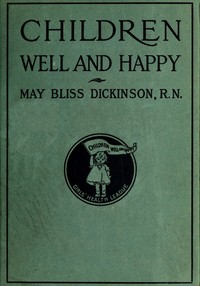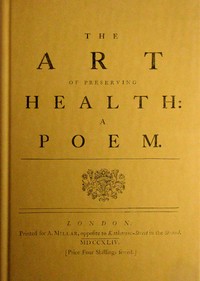
eBooks
93 Books foundWelcome to the DEQWU Public Domain Literature Library
The archive at /ebooks offers 93 public-domain works in medicine, health, anatomy, and public health, freely accessible for reading, study, and reference. Each book has been selected for its historical and educational value, drawn from the collections of Project Gutenberg and presented with editorial notes that illuminate context and content.
Browsing the Catalogue
Books are organized into four categories: Medicine and Public Health. You can browse by category or search for specific titles, authors, or subjects. Each book page includes a full bibliographic record, keywords, and a catalogue note that summarizes the work and highlights notable features. The library is designed for readers interested in historical medical texts, from 18th-century treatises to early 20th-century health manuals.
What You Will Find
Each record includes the title, author, digital source (Project Gutenberg), keywords, target reader, and a catalogue note. The notes are written to guide first readings, explaining the work's structure, argument, and historical context. Source attribution is explicit: all texts are from Project Gutenberg, and we provide direct links to the full ebooks. The library does not host files but serves as a curated guide.
Categories and Their Scope
The Medicine category covers a wide range of works: health manuals, surgical atlases, physiological treatises, and studies of specific diseases. It includes both popular advice and specialized medical research. The Public Health category Catalogue maintenance uses source records and bibliographic context. These categories overlap in themes but differ in emphasis: one on clinical and individual health, the other on population and policy.
Three Reading Paths
1. The Evolution of Medical Thought: Start with Erasmus Darwin's Zoonomia (Vol. I) to see early physiological classification, then move to William Withering's Account of the Foxglove for clinical casework, and finish with Paul Ehrlich's Histology of the Blood for modern laboratory science. 2. Health Advice Through the Ages: Read Luigi Cornaro's Discourses on a Sober and Temperate Life for Renaissance self-care, then Pye Henry Chavasse's Advice to a Mother for Victorian child-rearing, and finally Anna Steese Richardson's Better Babies and Their Care for early 20th-century scientific motherhood. 3. Public Health and Reform: Begin with Edwin Chadwick's report on interment in towns, continue with Stephen Smith's The City That Was on New York's sanitation, and conclude with Oscar Jewell Harvey's account of the 1918 influenza pandemic.
Using the Library
Each book page offers a unique editorial note that does not replace the original text but prepares you to read it with attention. The notes often discuss the author's voice, rhetorical strategies, and the work's place in medical history. Whether you are a student, researcher, or curious reader, this catalogue provides a structured entry into the public-domain literature of health and medicine.
Bibliographic dates and catalogue measurements
The catalogue distinguishes the Project Gutenberg digital release from a work’s original or first publication. Project Gutenberg is identified as the digital source for the edition available here; its release year is therefore shown as Gutenberg Release Year, not as the work’s original publication year.
When an explicit first-publication or issue date can be supported directly by the title or issue information, it may be shown separately as First Publication Year. When that date cannot be confirmed, the catalogue displays Not confirmed rather than guessing a year.
Where the source text can be measured reliably, the catalogue may provide word count and estimated reading time. These measurements describe reading scope and are not quality rankings.
The current catalogue contains 4 active subject categories: Medicine, Public Health, Anatomy Physiology, and Nursing Hygiene. Categories are browsing aids and may overlap where a work reasonably fits more than one subject.

- Featured