About 843 minutes
Zoonomia; Or, the Laws of Organic Life, Vol. I — Reading Notes
Medicine
193,846 recorded words. 13 minutes difference from this book's estimate.
View Gutenberg source #15707
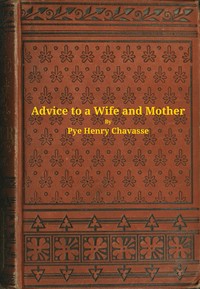
For Advice to a wife and mother in two parts — Key Ideas to Explore, the stored edition analysis reports 190,850 words, 13 hr 50 min estimated reading time, and 36 detected text sections.
The text analysis averages about 22.8 words per sentence, while the detected sections provide another way to judge how the source is divided.
Project Gutenberg metadata also associates the work with “Child rearing -- Popular works,” connecting these edition facts with the source record’s subject description.
Explore this collection
These alternatives are selected using recorded categories and estimated reading time.
About 843 minutes
Medicine
193,846 recorded words. 13 minutes difference from this book's estimate.
View Gutenberg source #15707About 1,007 minutes
Medicine
231,481 recorded words. 177 minutes difference from this book's estimate.
View Gutenberg source #27600About 645 minutes
Medicine
148,223 recorded words. 185 minutes difference from this book's estimate.
View Gutenberg source #20817Search stored excerpts and compare books → Choose by your preferences →
Choices use stored catalog measurements. Estimates vary with reading speed. A shared category is a catalog label, not a claim that two books have the same argument or literary quality.
Search reads excerpt text stored with this catalog and links to its associated Gutenberg record. The connection is stored in the site database; this tool does not recheck that every excerpt is word-for-word identical to that external record. Excerpt search does not cover every chapter and does not verify historical publication dates.
Catalog snapshot checked: 2026-09-25. Coverage: 93 public books, 93 available source excerpts.
Read the complete public-domain text at its original source.
Read on Project GutenbergPye Henry Chavasse, a Birmingham surgeon and Fellow of the Royal College of Surgeons, addresses his 1881 manual directly to women, framing it as both a medical guide and a moral duty. The book is divided into two parts—advice to a wife and advice to a mother—and its seventeenth edition attests to its popularity. Chavasse’s preface boasts of sales in the tens of thousands, claiming the work has made him “troops of friends.” Yet the tone is stern: he warns that he has “not shrunk from duty” and will speak “plain and unpalatable truths.” The excerpts reveal a text that mixes clinical instruction with religious epigraphs (e.g., “Thy wife shall be as the fruitful vine”) and a paternalistic voice that assumes women need firm guidance.
Chavasse establishes his authority early: he is a Fellow of the Royal College of Surgeons, a Fellow of the Obstetrical Society of London, and a former president of a medico-chirurgical society. He dedicates the book to his Birmingham patients, some of whom he attended for over thirty years, even delivering them as infants and later attending their own confinements. This personal history underpins his claim to speak with experience. Yet the advice is often prescriptive rather than explanatory. In the preface, he compares his role to a surgeon who must “probe a serious and deep-seated wound to the bottom” and administer “bitter medicine.” The patient—the wife or mother—is expected to comply. The catalog subjects list “Pregnancy—Popular works” and “Child rearing—Popular works,” but the excerpts show that Chavasse’s approach is less about informing than about directing. He does not present options; he declares what is “absolutely necessary” and what a woman “ought” to do. The moral weight of his instructions is reinforced by the biblical motto on the title page, framing domestic health as a divine expectation.
A substantial portion of the excerpted text concerns the treatment of infant constipation, revealing Chavasse’s deep anxiety about the overuse of laxatives. He repeatedly warns that once a mother begins giving “opening medicine,” it becomes “a dire necessity” and “woe-betide the poor unfortunate child!” He provides seven specific aperient recipes, including mixtures of syrup of rhubarb and castor oil, fluid magnesia, syrup of senna, and even a soap suppository “of the size, in circumference, of a cedar pencil.” Yet each recommendation is hedged with caution: the medicine should be given only when “absolutely necessary,” and the mother should wait at least two days between doses. He also suggests non-pharmaceutical alternatives like oatmeal gruel or castor oil rubbed on the abdomen. The tone is urgent and repetitive—“Bear in mind, and let it make a strong impression upon you”—and he explicitly warns against two mercury preparations. This section exemplifies how the book blends practical recipes with a moralistic campaign against perceived medical overreach, a theme that extends beyond the catalog subject of “Children—Health and hygiene.”
The catalog subjects classify this work under “Child rearing,” “Children—Health and hygiene,” “Labor (Obstetrics),” and “Pregnancy.” The excerpts confirm that the book covers these topics, but they also hint at a broader scope. The title page promises “Advice to a Wife on the Management of Her Own Health” and an “Introductory Chapter especially addressed to a Young Wife,” none of which appear in the provided text. The preface mentions “plain and unpalatable truths” about marriage and female duty, suggesting a moral framework that the catalog does not capture. The excerpts are drawn from the second part (advice to a mother) and focus on infant care; the first part, on pregnancy and labor, is absent. Readers should note that the book’s 190,850 words span 36 text sections, and the available passages represent only a fraction. The catalog’s clinical headings do not convey Chavasse’s rhetorical style—his use of exclamation points, biblical allusions, and direct address—which shapes how the medical advice is delivered.
Chavasse’s manual is best approached as a historical document of Victorian domestic medicine, where moral authority and clinical instruction are inseparable. Readers interested in the history of obstetrics or child-rearing will find a wealth of period-specific remedies and attitudes, but should be aware that the excerpts underrepresent the book’s first half. The catalog subjects accurately list the medical domains, but they flatten the text’s rhetorical urgency and its assumption of a passive, obedient reader. To understand the full scope of Chavasse’s project, one must read beyond the aperient recipes and into the introductory chapters, where the surgeon’s voice is most explicit about the duties of wife and mother.
I’ve often thought Dr. Chavasse’s stern little volume, with its warnings and its wary trust in nature, might find a gentler echo elsewhere. That older book, Children well and happy, seems to breathe the same quiet air, though it worries less. A softness creeps between those older pages, a patient glance at childhood’s ordinary muddles. I like imagining them side by side on a shelf—one fretting, one simply watching. There’s a tender kinship there, the kind found only after fifty years of shelving. Children well and happy — Context and Discussion
Save your reaction, strongest insight, and memorable passage.