About 275 minutes
Health Through Will Power — Key Ideas to Explore
Nursing Hygiene
63,228 recorded words. 77 minutes difference from this book's estimate.
View Gutenberg source #37109
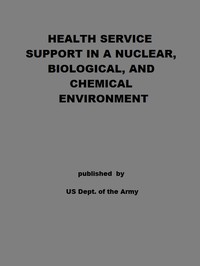
The catalog record for Health Service Support in a Nuclear, Biological, and Chemical Environment Tactics, Techniques, and Procedures — Context and Discussion provides practical reading context through 80,860 words, 5 hr 52 min estimated reading time, and 18 detected text sections.
The text analysis averages about 16.2 words per sentence, while the detected sections provide another way to judge how the source is divided.
Project Gutenberg metadata also associates the work with “Weapons of mass destruction -- Health aspects -- Handbooks, manuals, etc.,” connecting these edition facts with the source record’s subject description.
Explore this collection
These alternatives are selected using recorded categories and estimated reading time.
About 275 minutes
Nursing Hygiene
63,228 recorded words. 77 minutes difference from this book's estimate.
View Gutenberg source #37109About 274 minutes
Nursing Hygiene
62,982 recorded words. 78 minutes difference from this book's estimate.
View Gutenberg source #26718About 257 minutes
Nursing Hygiene
58,932 recorded words. 95 minutes difference from this book's estimate.
View Gutenberg source #72648Search stored excerpts and compare books → Choose by your preferences →
Choices use stored catalog measurements. Estimates vary with reading speed. A shared category is a catalog label, not a claim that two books have the same argument or literary quality.
Search reads excerpt text stored with this catalog and links to its associated Gutenberg record. The connection is stored in the site database; this tool does not recheck that every excerpt is word-for-word identical to that external record. Excerpt search does not cover every chapter and does not verify historical publication dates.
Catalog snapshot checked: 2026-09-25. Coverage: 93 public books, 93 available source excerpts.
Read the complete public-domain text at its original source.
Read on Project GutenbergThe manual opens with a table of contents that reveals a tightly structured, hierarchical organization: chapters progress from the medical threat through command and control, levels of care, and specialized environments. The language is consistently imperative and procedural, as in “Actions Before a Nuclear, Biological, or Chemical Attack” (Chapter 3, Section 3-5). This voice establishes the manual as a directive reference rather than a descriptive text.
However, the excerpts also show a striking shift in pace and detail when moving from chapter headings to the appendices. The sample/specimen background document and CB Incident Interview form (Figure B-2) introduce a checklist-driven, interrogatory style—complete with fields for odor, consistency, and symptom onset—that contrasts with the earlier expository paragraphs. This change signals a move from broad tactical guidance to granular, on-the-ground data collection.
The manual operates in two distinct linguistic registers. The first, found in chapters 1–4, uses declarative, instructional sentences: “Health Service Support Command and Control Planning Considerations” (2-2) and “Medical Triage” (3-13) are presented as numbered lists and subheadings. The tone is impersonal and authoritative, with frequent use of the future tense (“will be”) and passive constructions (“is conducted”).
The second register appears in the appendices, where language becomes interrogative and granular. The CB Incident Interview form asks: “ODOR: _____NONE _____SWEET _____FRUITY _____IRRITATING _____PEPPER _____FLOWER _____CHANGING _____ OTHER.” This shift from prescription to inquiry reflects the manual’s dual purpose: to instruct and to collect evidence. The checklist format forces a methodical pace, slowing the reader from skimming procedures to scrutinizing individual symptoms.
The manual’s narrative voice changes depending on its target audience. In the main body, the speaker is the Department of the Army—an institutional “we” that issues commands: “Leaders must ensure…” (implied in 2-6). This voice assumes a commander or medical officer as reader, someone who needs broad operational guidance.
In the interview form, the voice shifts to that of an investigator or medic addressing a subject: “SUBJECT'S NAME: _____________________________________________________ ALIAS #1_____________________________ #2_____________________________.” The form’s structure anticipates a real-time conversation, with blank lines for narrative responses (“DESCRIBE DEVELOPMENT OF COLOR:_______________________”). This change in voice—from omniscient directive to neutral data collector—reflects the manual’s recognition that battlefield conditions require both top-down planning and bottom-up reporting.
The manual’s pacing is governed by its formatting. Early chapters rely on numbered paragraphs (e.g., 3-5, 3-6, 3-7) that create a predictable, skimmable rhythm. Each section is brief, often a single sentence or short paragraph, allowing rapid consultation during operations.
In contrast, the appendices introduce open-ended fields that demand slower, more deliberate reading. The sample/specimen background document includes lines for “COMMENTS: _____________________________________________________________” and “RELATED SPECIMENS_________________________________________.” These blank spaces visually break the dense text, inviting the user to pause and write. The interview form’s checkboxes (“YES___ NO___”) and lined prompts (“DESCRIBE:_________________”) create a hybrid pace: quick ticks for binary data, longer pauses for narrative description. This structural variation mirrors the manual’s function as both a quick-reference guide and a detailed recording tool.
Readers should note that the manual’s appendices are not afterthoughts but integral to its purpose. The shift from procedural prose to data-collection forms reflects a core tension in NBC medical support: the need for standardized, rapid action versus the need for precise, individualized documentation. Pay attention to how the manual uses white space, checkboxes, and blank lines to modulate reading speed—a subtle but crucial feature for field use.
Sometimes I page through this old field manual and feel the weight of all those checklists—how we try to capture every contingency, every symptom, every form. It’s strangely tender, that desire to be prepared for the unthinkable. The same earnestness shows up in Better babies and their care — A Reader’s Guide, a quieter sort of emergency preparedness, one heart at a time. Both feel like love disguised as procedure.
Your answers remain private and are stored only in this browser.