About 83 minutes
The art of preserving health: A poem — Story, Setting & Ideas
Nursing Hygiene
19,083 recorded words. 29 minutes difference from this book's estimate.
View Gutenberg source #70326
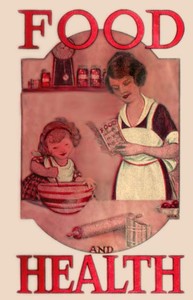
Food and Health — Reading Companion can be approached with a clearer sense of reading commitment from its source measurements: 12,221 words, 54 min estimated reading time, and 2 detected text sections.
The text analysis averages about 16.2 words per sentence, while the detected sections provide another way to judge how the source is divided.
Project Gutenberg metadata also associates the work with “Cooking,” connecting these edition facts with the source record’s subject description.
Explore this collection
These alternatives are selected using recorded categories and estimated reading time.
About 83 minutes
Nursing Hygiene
19,083 recorded words. 29 minutes difference from this book's estimate.
View Gutenberg source #70326About 104 minutes
Nursing Hygiene
23,885 recorded words. 50 minutes difference from this book's estimate.
View Gutenberg source #30660About 113 minutes
Nursing Hygiene
25,959 recorded words. 59 minutes difference from this book's estimate.
View Gutenberg source #37640Search stored excerpts and compare books → Choose by your preferences →
Choices use stored catalog measurements. Estimates vary with reading speed. A shared category is a catalog label, not a claim that two books have the same argument or literary quality.
Search reads excerpt text stored with this catalog and links to its associated Gutenberg record. The connection is stored in the site database; this tool does not recheck that every excerpt is word-for-word identical to that external record. Excerpt search does not cover every chapter and does not verify historical publication dates.
Catalog snapshot checked: 2026-09-25. Coverage: 93 public books, 93 available source excerpts.
Read the complete public-domain text at its original source.
Read on Project GutenbergThe booklet opens with a direct question to its reader: “Do women read our little books which come so regularly to their homes?” The answer is an emphatic yes, establishing an intimate, almost conversational tone that persists throughout. Published by the Lydia E. Pinkham Medicine Company, Food and Health is a hybrid text: part cookbook, part testimonial collection for the company’s Vegetable Compound. The recipes—such as Chocolate Frosting and Lemon Pie with Meringue—sit alongside letters from women describing ailments relieved by the medicine. This juxtaposition creates a curious rhythm, alternating between practical kitchen instruction and earnest health narratives.
The book’s organization reflects its dual mission. The opening “Hints for Mealtime” section acknowledges the daily question “what shall I have for the next meal?” and offers carefully selected recipes. But immediately after, the text pivots to health: “More important to you than the question of food is that of health.” This shift is abrupt, signaling that the recipes are a lure for the medicine’s promotion. Testimonials are introduced as letters from women “stating for the benefit of other women who are sick just how they felt.” The structure thus moves between domestic advice and medical endorsement, creating a pattern where each recipe is followed by one or more testimonial letters. For instance, a frosting recipe precedes a letter from Mrs. Wm. Juhnke, who credits the Vegetable Compound with enabling her to do housework for seven. This alternating layout suggests the company viewed cooking and health as inseparable concerns for its audience.
The testimonial letters employ a consistent, plainspoken voice. Women describe symptoms in concrete terms: “pains across the small of my back,” “headache, dizzy and faint spells,” “soreness in her back.” The letters often mention how the writer learned about the medicine—through a newspaper advertisement in the Toronto Globe or the Hamilton Spectator—and then report improvement. A typical closing is “I recommend it to all my neighbors.” The language is unadorned, relying on personal experience rather than medical jargon. Notably, several letters include the writer’s full address, lending an air of authenticity. The company’s editorial hand is visible in the uniformity of phrasing: nearly every letter ends with permission to publish. This repetition of structure and sentiment creates a chorus of satisfied customers, reinforcing the medicine’s reputation through cumulative testimony.
The booklet’s pace varies markedly between sections. Recipe instructions are brisk and imperative: “Cut chocolate into small pieces, add sugar and water and stir until blended.” The method for White Frosting is a single sentence. In contrast, the testimonial letters are more narrative, often recounting a before-and-after story. For example, Mrs. I.P. Clause describes her daughter’s suffering “every month so that she could hardly move around the house” and the eventual relief after taking the compound. This shift from terse instruction to personal anecdote creates a rhythm that keeps the reader engaged. The promotional passages, such as the description of Lydia E. Pinkham’s Vegetable Compound as “a Woman’s Medicine for Women’s Ailments,” adopt a reassuring, authoritative tone. The overall effect is a text that moves between the practical and the emotional, the domestic and the medicinal, mirroring the dual concerns of its intended audience.
Readers approaching Food and Health should attend to how the booklet frames health as a prerequisite for domestic harmony. The line “when things are the reverse and he has to help do the work, he looks for the cause of the trouble and its remedy” reveals an underlying anxiety about women’s roles. The medicine is presented as the solution that restores order. This editorial note encourages you to consider the interplay of recipe and remedy, and how the text constructs an ideal of womanhood that is both capable and dependent on patent medicine.
That Pinkham booklet stayed with me—how recipes and remedies blurred into one quiet voice of care. It reminded me of another old text, The art of preserving health: A poem — Story, Setting & Ideas, where wellness feels less like instruction and more like a gentle breath. Both made me think how we’ve always folded hope into daily habits.
Answer a few questions and save a private reflection on this device.