About 233 minutes
The ugly-girl papers — Reading Companion
Medicine
53,394 recorded words. 4 minutes difference from this book's estimate.
View Gutenberg source #75279
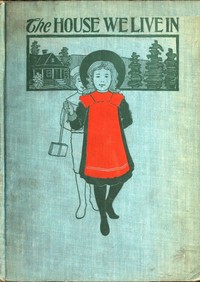
This digital edition of The House We Live In; or, The Making of the Body — Context and Discussion is described by source-level measurements including 54,436 words, 3 hr 57 min estimated reading time, and 33 detected text sections.
The text analysis averages about 17.6 words per sentence, while the detected sections provide another way to judge how the source is divided.
Project Gutenberg metadata also associates the work with “Physiology -- Juvenile literature,” connecting these edition facts with the source record’s subject description.
Explore this collection
These alternatives are selected using recorded categories and estimated reading time.
About 233 minutes
Medicine
53,394 recorded words. 4 minutes difference from this book's estimate.
View Gutenberg source #75279About 227 minutes
Medicine
52,197 recorded words. 10 minutes difference from this book's estimate.
View Gutenberg source #46711About 252 minutes
Medicine
57,824 recorded words. 15 minutes difference from this book's estimate.
View Gutenberg source #25020Search stored excerpts and compare books → Choose by your preferences →
Choices use stored catalog measurements. Estimates vary with reading speed. A shared category is a catalog label, not a claim that two books have the same argument or literary quality.
Search reads excerpt text stored with this catalog and links to its associated Gutenberg record. The connection is stored in the site database; this tool does not recheck that every excerpt is word-for-word identical to that external record. Excerpt search does not cover every chapter and does not verify historical publication dates.
Catalog snapshot checked: 2026-09-25. Coverage: 93 public books, 93 available source excerpts.
Read the complete public-domain text at its original source.
Read on Project GutenbergThe book opens with a mother showing her children a picture of a house and using it to launch a sustained comparison between a dwelling and the human body. The first chapter, “Houses and Temples,” establishes the metaphor by quoting 2 Corinthians 5:1 and 1 Corinthians 6:19, framing the body as both a house and a temple. The dialogue format immediately positions the mother as the teacher and the children—Helen, Percy, Amy, and Elmer—as curious learners who ask questions that drive the explanation forward. The opening pages set a conversational, domestic tone that persists throughout the excerpts.
The mother’s extended metaphor treats each organ and system as a room or function in a house. The heart is a “pumping engine,” the blood is a “busy person” that carries supplies, and the kidneys are “filters” that strain out poisons. This approach makes abstract physiology concrete for child readers. For example, the blood’s journey is described as visiting the “kitchen,” “bath room,” and “brain,” taking what it needs and leaving waste behind. The metaphor is consistent but not rigid: the mother occasionally shifts to direct explanation when the children’s questions require it. The book’s title page indicates it is “intended to Assist Mothers in Teaching their Children How to Care for their Bodies,” and the dialogue format models how a parent might conduct such lessons at home.
In the excerpt, the mother traces a single drop of blood through multiple trips: to the “bath room” (lungs) to be cleaned, to the “kitchen” to help digest food, to the brain to aid learning, to the liver to make sugar and bile, and to the bones to deposit lime. She emphasizes that the blood both gives and takes, and that its quality depends on what “the master of the house sends into the kitchen to make blood.” This introduces the idea that diet directly affects health. The children’s questions—such as how blood climbs back to the heart—prompt explanations of vein valves and the pressure of incoming blood. The mother’s answers are detailed but stay within the house metaphor, making the circulatory system feel like a familiar domestic process.
The epigraphs from Corinthians establish a religious context: the body is a temple of the Holy Ghost, and readers are not their own. This moral dimension reappears in the chapter titles, such as “A Wicked Thief” and “A Cruel Murderer,” which likely refer to alcohol and narcotics (the book’s subtitle mentions “the Evil Effects of Narcotics and Stimulants”). The mother’s language occasionally carries judgment: the blood “makes no complaint as long as it can do its work well,” implying that a well-cared-for body is a dutiful servant. The book thus merges physiological instruction with character education, urging children to be responsible “masters” of their bodily houses.
The table of contents lists 28 chapters, each with a title that extends the house metaphor: “The Outside of the Body,” “Our Frame,” “The Cupola” (likely the head), “Our Telephone System” (nerves), “The Eating Room,” “A Pumping Engine,” “The Bath Room,” and “How the House Is Heated.” The chapters progress from external features to internal systems, then to senses and moral warnings. The dialogue format keeps the pace lively, with each child’s question prompting a new piece of information. The mother rarely lectures at length; instead, she responds to specific queries, which makes the exposition feel organic. The excerpts suggest that the book balances detailed anatomical facts with accessible analogies, though the complete text would be needed to assess the depth of coverage.
Readers approaching this book should expect a blend of domestic dialogue, religious morality, and systematic physiology. The house metaphor is not merely decorative but structures the entire explanation, so following it closely helps track the progression from bones to brain. The children’s questions often anticipate common confusions, making the book useful for parents who want to teach anatomy at home. Because the excerpts are incomplete, the later chapters on narcotics and stimulants may shift tone toward explicit warning, but the core method—teaching through analogy and conversation—remains consistent throughout.
I remember my mother’s voice like that, teaching with gentle certainty, calling the body a house. It reminded me of when I first read An Investigation into the Nature of Black Phthisis or Ulceration Induced by Carbonaceous Accumulation in the Lungs of Coal Miners — Key Ideas to Explore—how that quiet, clinical wording made the ache of lived breath feel suddenly holy. Both books told me: this flesh is a place to inhabit. And for a moment, I felt grateful we can come home to it.
Build a private reading journal entry for this title.