
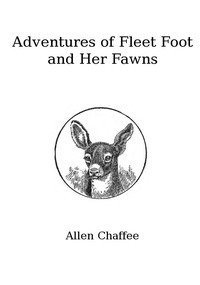
The Adventures of Fleet Foot and Her Fawns by Allen Chaffee
Allen Chaffee's book feels like a secret whispered by the trees themselves. Published in 1923, it has that classic, timeless quality of a story meant to be read aloud.
The Story
We follow Fleet Foot, a seasoned and clever doe, as she raises her two curious fawns, Spot and Speckle. The plot is the rhythm of their lives: learning which leaves are best to eat, understanding the warning signs of a lurking fox or a careless human, and finding safe thickets to rest in. There's no single villain, just the ongoing challenge of survival in a beautiful but demanding world. The changing seasons act as the chapters of their lives, from the fragile newness of spring to the harsh trials of winter.
Why You Should Read It
This book does something special. It completely drops you into the forest floor perspective. You feel the fawns' skittishness and Fleet Foot's constant, watchful love. Chaffee clearly adored nature, and his writing makes you see the woods not as a backdrop, but as a living, breathing community. It's a quiet lesson in observation, courage, and maternal instinct, all without ever feeling like a lesson.
Final Verdict
This is a warm, comforting read for nature lovers of all ages. It's ideal for parents to share with kids who love animals, or for any adult seeking a peaceful, nostalgic trip into the wilderness. If you enjoy the animal-focused stories of authors like Thornton Burgess or simply want a book that slows the world down, Fleet Foot's adventures are waiting for you.
This historical work is free of copyright protections. Thank you for supporting open literature.
George Martin
10 months agoThe citations provided are a goldmine for further academic study.
Nancy Taylor
2 weeks agoIt’s rare to find such a well-structured narrative nowadays, the author’s unique perspective adds a fresh layer to the discussion. It’s a comprehensive resource that doesn't feel bloated.
Mary Lopez
6 months agoFinally found a version that is easy on the eyes.
Robert Brown
7 months agoThe author provides a very nuanced critique of current methodologies.









Paul Davis
2 months agoGiven the current trends in this field, the author clearly has a deep mastery of the subject matter. Simple, effective, and authoritative – what else could you ask for?