
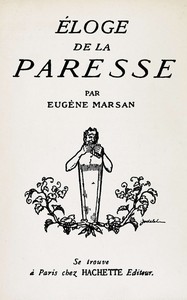
Éloge de la paresse by Eugène Marsan
Published in 1925, Eugène Marsan's Éloge de la paresse is a collection of essays that builds a thoughtful case for a life less frantic. Marsan, a French journalist and critic, watches the post-WWI world speeding up and asks a simple, powerful question: why?
The Story
There isn't a traditional plot with characters. Instead, Marsan walks us through his ideas. He starts by redefining 'laziness.' It's not sloth or apathy. For him, true laziness is a conscious choice to step back from the grind. It's the time you spend staring out a window, letting your mind wander, or simply enjoying a moment without purpose. He pokes fun at the busybody, the person who confuses motion with progress. He argues that our society glorifies work to a unhealthy degree, making us feel guilty for any moment of stillness. The book is his gentle, firm pushback against that guilt.
Why You Should Read It
This book is a quiet shock. What amazed me is how current it feels. Marsan is describing the 1920s, but he could be talking about our 24/7 email culture and the pressure to 'optimize' every second of our day. His writing isn't angry; it's clever and observant. He makes you see the absurdity in our own hustle. Reading it felt like permission to breathe. It’s not a guide to quitting your job, but a reminder that your worth isn't tied to your output. The most creative ideas, he suggests, often come when we're not trying to force them.
Final Verdict
This is a perfect book for anyone feeling burned out or questioning the 'always-on' lifestyle. If you enjoy thoughtful essays, a dash of philosophy, or writers like Seneca or Bertrand Russell who question everyday assumptions, you'll find a friend in Marsan. It's also a great pick for history lovers to see how these modern anxieties aren't new at all. Fair warning: it's a reflective, slow-paced read. Don't go in looking for a plot twist. Go in looking for a shift in perspective. Keep it on your nightstand for when the world gets too loud.
The copyright for this book has expired, making it public property. Share knowledge freely with the world.
James Williams
7 months agoTo be perfectly clear, the flow of the text seems very fluid. A true masterpiece.
Logan Hill
2 years agoFrom the very first page, the pacing is just right, keeping you engaged. Highly recommended.



Betty Nguyen
1 year agoFinally found time to read this!