
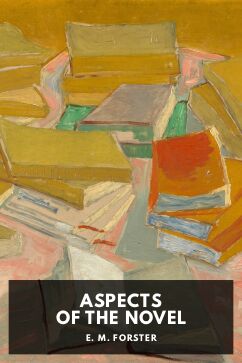
Aspects of the Novel - E. M. Forster
Let's be clear from the start: this isn't a novel. There's no murder mystery or sweeping romance (though he talks about plenty of them). 'Aspects of the Novel' is a collection of eight lectures. Forster uses them to break down what he sees as the core ingredients of fiction. He walks us through them one by one: The Story, People (his word for characters), The Plot, Fantasy, Prophecy, Pattern, and Rhythm.
The Story
Forster starts with the simplest part: the story. He says it's just 'a narrative of events arranged in their time-sequence.' The king died, and then the queen died. That's a story. But a plot, he argues, is something smarter: 'The king died, and then the queen died of grief.' That 'of grief' is the connection, the causality that turns a simple sequence into a plot. He then builds on this foundation, examining how characters function within these structures, how some novels bend reality with 'fantasy,' and how others achieve a deeper, almost spiritual quality he calls 'prophecy.' He's not laying down laws; he's having a brilliant, one-sided conversation with the great novels of history, pointing out what makes them work.
Why You Should Read It
This book changed how I read. It gave me a vocabulary for things I'd always felt but couldn't name. His idea of 'flat' and 'round' characters is legendary for a reason. A flat character (think Mrs. Micawber in David Copperfield with her constant 'I will never leave Mr. Micawber!') is built around a single idea or quality. They're predictable, but often wonderfully memorable. A round character (like Jane Austen's Elizabeth Bennet) has the capacity to surprise us, to feel like a real, complex person. Reading Forster feels like getting a masterclass from a friend who's both deeply knowledgeable and completely unpretentious. He's funny, he's opinionated (his take on Henry James is priceless), and he never forgets that the point of all this analysis is a greater love for the story itself.
Final Verdict
Perfect for curious readers who want to look under the hood of their favorite books without getting a degree in literary theory. It's a must-read for aspiring writers, not as a rulebook, but as a source of timeless wisdom from a master craftsman. If you enjoy smart talk about books over a cup of coffee more than dry academic jargon, you'll find a kindred spirit in E.M. Forster. Just be warned: you might start diagnosing the characters in your next read as 'flat' or 'round.'
The copyright for this book has expired, making it public property. It is now common property for all to enjoy.
Sarah Lopez
8 months agoIt’s rare to find such a well-structured narrative nowadays, the practical checklists included are a great touch for real-world use. I'll be recommending this to my students and colleagues alike.
Mary Perez
9 months agoFrom a researcher's perspective, the visual layout and supporting data make the reading experience very smooth. It cleared up a lot of the confusion I had previously.
Paul White
4 months agoImpressive quality for a digital edition.
Deborah Nguyen
2 years agoI didn't expect much, but the depth of research presented here is truly commendable. One of the best books I've read this year.


Karen Davis
3 months agoThe clarity of the introduction set high expectations, and the breakdown of complex theories into digestible segments is masterfully done. It cleared up a lot of the confusion I had previously.