
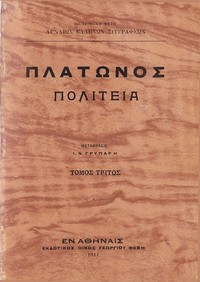
Πολιτεία, Τόμος 3 by Plato
Let's set the scene. We're in ancient Athens. Socrates is chatting with a group of friends—Glaucon, Adeimantus, and others. They start with a simple question: 'What is justice?' But this being Socrates, a simple question never stays simple. To figure out what makes a person just, they decide to imagine a just city. They build it piece by piece, from its basic needs to its complex government.
The Story
The group designs a city with three classes: workers, soldiers (called 'auxiliaries'), and rulers ('guardians'). The guardians, they argue, must be the wisest and most virtuous. To keep them focused solely on the city's good, Plato proposes radical measures. They own no property, have no private families (children are raised communally), and their lives are strictly controlled. Then, the book takes a sharp turn. Plato argues that the stories and art allowed in the city must be heavily censored. He famously wants to kick out the poets, fearing their emotional tales will corrupt citizens and weaken the guardians' resolve. The whole project is about creating perfect harmony, but the cost is individual freedom and artistic expression.
Why You Should Read It
This book shook me. It's not about ancient politics; it's a mirror. Every time I read a headline about censorship, propaganda, or a leader claiming to know what's best for everyone, I think of The Republic. Plato makes a frighteningly good case for order and control. His logic is seductive. But seeing where that logic leads—to a society without personal art, private love, or free thought—is a powerful warning. It forces you to ask: how much freedom would you trade for perfect safety and harmony? Is that even a trade we should make? Socrates and his friends aren't villains; they're brilliant people trying to solve real problems. That's what makes their conclusions so compelling and, at times, deeply unsettling.
Final Verdict
This is for anyone who loves big ideas and doesn't mind a mental workout. It's perfect for book club debates, for students of politics or philosophy, or just for curious readers who want to understand one of the foundational texts of Western thought. Don't expect a novel with a plot—it's all dialogue and argument. But if you're willing to engage with it, you'll find yourself arguing with Plato page by page. It's a book that doesn't give answers; it teaches you how to question the very foundations of your society. Just be prepared—it might change how you see the world.
This is a copyright-free edition. It is now common property for all to enjoy.
Emily Taylor
7 months agoBefore I started my latest project, I read this and it manages to maintain a consistent flow even when discussing difficult topics. It’s a comprehensive resource that doesn't feel bloated.
Karen Sanchez
3 months agoGreat digital experience compared to other versions.
Deborah Hernandez
1 year agoThanks for the recommendation.
Aiden Allen
1 year agoI had low expectations initially, however the flow of the text seems very fluid. Don't hesitate to start reading.


Mary Hernandez
7 months agoI found the author's tone to be very professional yet accessible, the insights into future trends are particularly thought-provoking. A solid investment for anyone's personal development.